
- Home
- Business Directory
- Get the App
- Things To See & Do
- News
- Properties
- Event Guide
 ES
ES
Albuñol
Albuñol – History, Beaches, and Services in the Heart of the Costa Granadina
Albuñol is a municipality located in the easternmost part of the Costa Tropical. Its territory spans mountainous areas, fertile valleys, and coastline, descending from the Sierra de la Contraviesa to the Mediterranean Sea, offering a diverse and appealing landscape for visitors interested in both nature and culture.
The municipality is made up of several population centers, including Albuñol (the municipal capital), La Rábita, and El Pozuelo, along with smaller villages such as Los Castillas, La Ermita, and El Castillo de Huarea. This mix of settlements provides a variety of experiences, from the traditional interior village life to the more relaxed coastal environments along the Mediterranean.
A Village with History
Albuñol has a rich history that stretches back to prehistoric times, as evidenced by the Cueva de los Murciélagos, one of the most important Neolithic sites in Western Europe due to the preservation of organic materials found inside.
During the Andalusian‑Moorish period, Albuñol was a key settlement due to its strategic location between the mountains and the sea, and the fertility of its lands, which supported the cultivation of vineyards, fig trees, and almond groves. By the late 17th century, the municipality experienced a period of demographic and economic growth driven by agriculture, with local products exported through nearby ports.
What to See and Do
The town of Albuñol features a traditional urban center with typical Andalusian architecture, including spaces such as the Plaza del Ayuntamiento, surrounded by shops and services, and charming streets ideal for leisurely strolls.
Nature enthusiasts can explore numerous hiking trails, including the Ruta de las Angosturas, which winds through a narrow ravine with lush vegetation and striking rock formations, perfect for trekking and outdoor exploration.
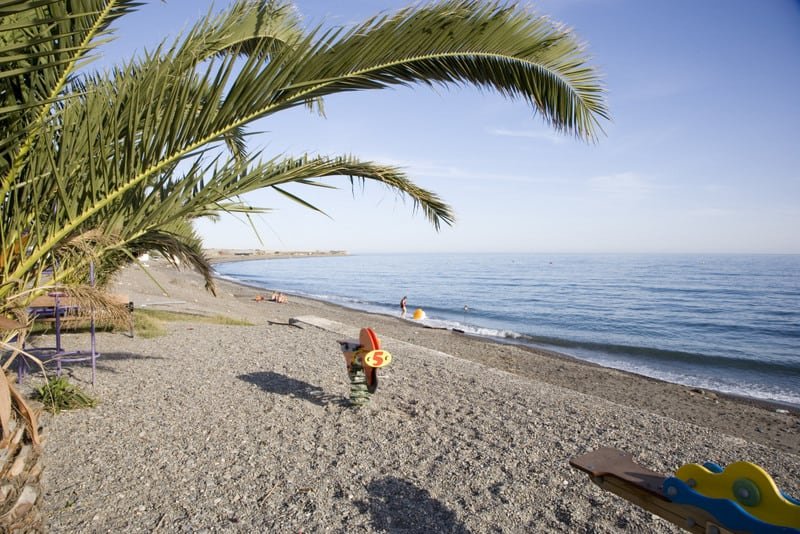
For beach lovers, the municipality offers several beautiful beaches and coves. Highlights include Playa de La Rábita, with an urban atmosphere and promenade; Playa de El Pozuelo, the easternmost beach of the Costa Tropicañ; Playa del Gaiterillo, Playa del Cuervo, and the quieter Cala Chilches, a peaceful spot between Melicena and La Rábita.
The area also features archaeological and natural attractions, such as the surroundings of the Cueva de los Murciélagos, combining cultural heritage with scenic landscapes.
Services and Quality of Life
Albuñol provides a complete network of services. The municipality has a health center with emergency care on the Órgiva road and several medical clinics in La Rábita, El Pozuelo, and Los Castillas, ensuring accessible healthcare across all neighborhoods.
In education, Albuñol has primary schools across its different population centers and a secondary school, offering comprehensive education for all ages.
Municipal services include administrative offices, a library, sports facilities, and active senior centers. A wide range of shops, bars, and restaurants contributes to a dynamic and comfortable daily life while enhancing the experience of visitors exploring the area.
Gastronomy and Traditions
Local cuisine reflects the diversity of the region, blending coastal and inland products. Traditional dishes include seafood stews, fried fish, and recipes made with fresh ingredients from local gardens and farmland. Local festivals and celebrations provide opportunities to experience popular culture and share memorable moments with residents.