
- Home
- Business Directory
- Get the App
- Things To See & Do
- News
- Properties
- Event Guide
 ES
ES
Sorvilán
Sorvilán – A Destination with Deep Roots and Authentic Charm
Sorvilán is a small town and municipality located in the Sierra de la Contraviesa, in the eastern part of Granada’s Costa Tropical. Covering approximately 34 km², the municipality stretches from mountainous inland landscapes down to the Mediterranean Sea, offering a diverse setting that combines hills, valleys, and coastline.
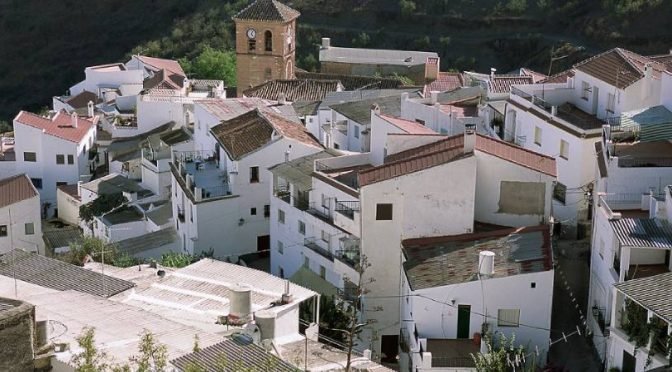
The main village of Sorvilán, the municipal capital, preserves its traditional character with narrow streets and whitewashed houses that reflect both its Andalusi and Christian heritage. The municipality also includes the villages of Melicena, Los Yesos, and Alfornón. Altogether, the population is around 500 residents, with roughly 150 living in Sorvilán itself, while Melicena is one of the most populated settlements within the municipality.
Origins and Historical Development
Sorvilán’s origins date back to the Andalusi period, when small agricultural hamlets were established, supported by sophisticated irrigation systems. Historical records place the settlement as early as the 10th and 11th centuries. During the Nasrid era, agriculture—particularly vine cultivation—and water management were central to the local economy.
Following the Christian conquest in the 16th century and the subsequent repopulation process, Sorvilán maintained its agricultural identity. By the late 17th century, however, the area experienced a period of notable prosperity closely linked to viticulture. The southern slopes of the Contraviesa mountains, open to Mediterranean influences, became extensively planted with vineyards adapted to different altitudes.
At higher elevations, grapes were mainly used for distilling spirits. In the mid-level slopes surrounding Sorvilán, wine and wine alcohol were produced and later transported to Jerez, where they were used to fortify local wines. In the lower areas near Melicena, Los Yesos, and surrounding farmsteads, raisin production was particularly important, with large quantities traded to Málaga.
Mulberry cultivation also played a significant economic role. Its leaves fed silkworms, and the silk production was sent to textile workshops in the Alpujarra Alta region, especially to Ugíjar.
Landscape, Nature, and Outdoor Activities
Situated at approximately 760 meters above sea level, the village of Sorvilán stands on rolling hills that offer sweeping views of the Sierra de la Contraviesa and the Mediterranean Sea. The surrounding natural environment makes it an ideal destination for hiking and outdoor activities.
The municipality also provides access to several beaches within its boundaries, including Los Yesos, Las Cañas, and Melicena, allowing visitors to enjoy both mountain and coastal experiences within a short distance.
The mild climate, influenced by subtropical Mediterranean conditions, supports traditional agriculture based on vineyards, almond trees, and other Mediterranean crops—an essential part of the area’s cultural identity.
Culture, Traditions, and Gastronomy
Community life in Sorvilán revolves around local traditions and festivities. One of the most important celebrations is the Feast of San Cayetano, held in early August, bringing together residents and visitors for music, popular events, and communal gatherings.
Local gastronomy reflects Andalusian culinary traditions, featuring dishes such as migas (fried breadcrumbs), goat stew, and traditional desserts like almond pudding, fig bread, and fritters.