
- Home
- Business Directory
- Get the App
- Things To See & Do
- News
- Properties
- Event Guide
 ES
ES
Carchuna
Carchuna
Carchuna is a coastal village known for its authenticity, wide beaches, and valuable historical heritage. Traditionally linked to agriculture and fishing, it was administratively dependent on Motril for centuries until 1996, when it became a Local Autonomous Entity together with Calahonda, reflecting the close historical and geographical connection between the two communities. Today, Carchuna combines tradition, heritage, and nature, establishing itself as an ideal destination for those seeking tranquility, culture, and family-friendly tourism.
The local economy has historically revolved around the sea and the fertile tropical plain. Fishing remains part of its identity, while the cultivation of subtropical fruits — especially mangoes and avocados — has become one of its main economic drivers, favored by the mild microclimate of the Costa Tropical.
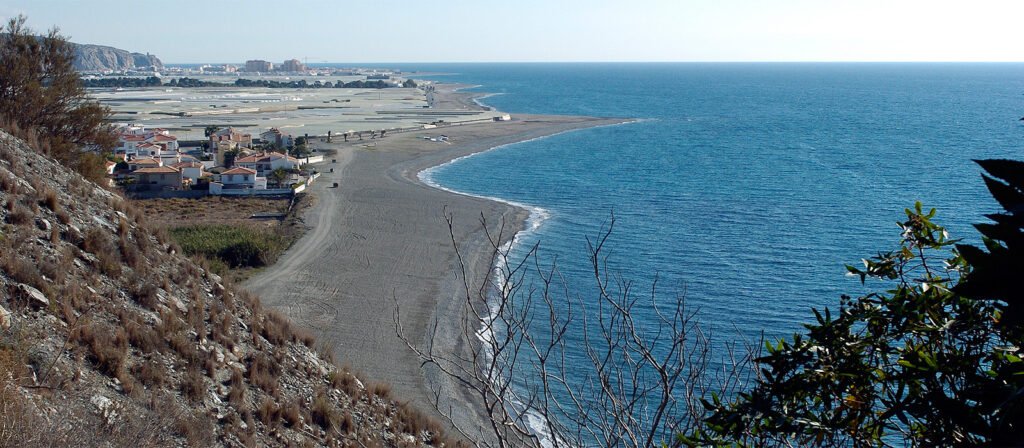
Carchuna Beach, stretching nearly three kilometers, offers a spacious and open shoreline that allows visitors to enjoy the sea even during peak season. It holds the Spanish Tourism Quality “Q” certification and stands out for the cleanliness of its waters and the richness of its natural surroundings. The nearby cliffs and seabed make it an attractive location for swimming, coastal walks, and water sports.
Carchuna’s historical heritage reflects its strategic importance throughout the centuries. The Castle of Carchuna, a former fortress integrated into the coastal defense system, is one of its main landmarks. It is joined by the Leaning Tower, the Atalaya del Zambullón watchtower, and Bigotes Cave — remains that highlight the area’s defensive role against maritime incursions. From the castle’s surroundings, visitors can enjoy panoramic views of the coastline, nearby coves, and the agricultural landscape that characterizes the Motril tropical plain.
Cultural and festive traditions play an important role in local life. During summer, the Patron Saint Festivals honor San Isidro Labrador and the Virgen de los Llanos, featuring processions, community events, open-air dances, and fireworks displays. In February, Carnival fills the streets with costumes, music, and competitions. In May, the traditional Crosses Festival brings decorated altars, performances, and local gastronomy, while on June 23rd, Saint John’s Eve keeps alive the customs of bonfires and midnight sea bathing. Holy Week is also part of the area’s religious identity, with the participation of the Brotherhood of Silence of Calahonda.
Carchuna invites visitors to stroll along its seafront promenade, savor dishes prepared with fresh fish and local tropical produce, and relax in a quieter setting than other parts of the Granada coastline. Its family-friendly atmosphere and authentic character make it a perfect destination to unwind by the Mediterranean without giving up history and tradition.
How to Get to Carchuna
Carchuna is located on Granada’s Costa Tropical and is easily accessible by road.
From Granada, the journey takes approximately 1 hour and 15 minutes. Take the A-44 motorway towards Motril, then connect to the A-7 (Mediterranean Motorway) heading east towards Almería, and follow the exit signposted for Carchuna–Calahonda.
From Motril, it is about a 15-minute drive via the N-340 or the A-7 eastbound, with clearly signposted access to Carchuna.
From Málaga Airport, the journey takes around 1 hour and 45 minutes. Take the A-7 motorway towards Almería, following the coastline until the exit for Carchuna.