
- Home
- Business Directory
- Get the App
- Things To See & Do
- News
- Properties
- Event Guide
 ES
ES
El Castillejo de Los Guajáres
El Castillejo of Los Guájares: a fortified medieval settlement in the Toba Valley
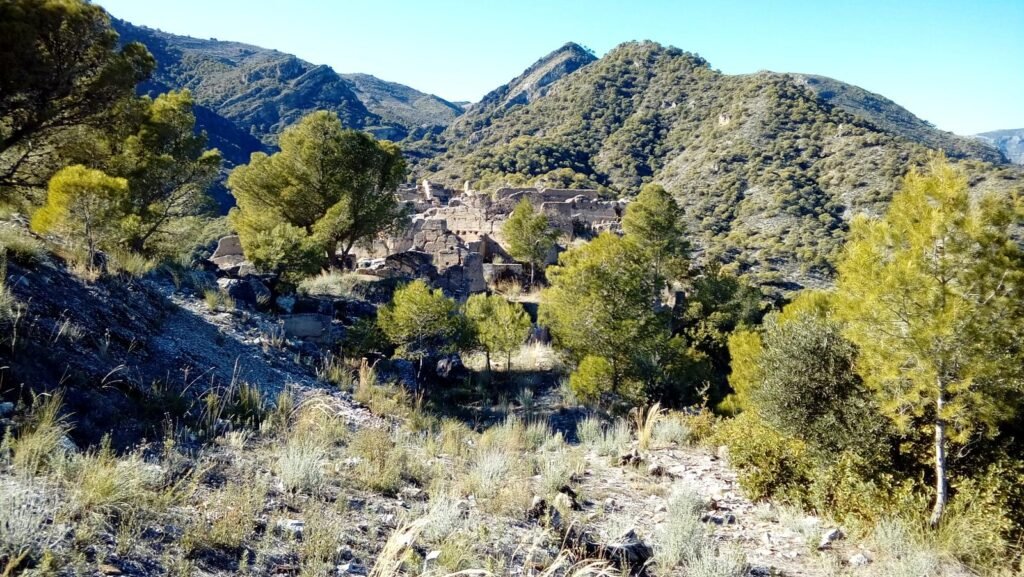
El Castillejo of Los Guájares is one of the most significant archaeological sites in the inland area of Granada’s Costa Tropical. The fortified settlement stands on a hill about 405 metres above sea level, overlooking the valley of the Toba River between the villages of Guájar Faragüit and Guájar Fondón. From this strategic position, the inhabitants controlled natural routes linking the coast with nearby regions such as the Lecrín Valley and the Alpujarra.
Today, visitors can reach the site via a signposted walking trail that leads to the remains of a medieval Andalusi settlement whose history dates back several centuries.
An Almohad settlement from the 12th to the 14th century
Archaeological research indicates that the settlement was inhabited from the late 12th century until the early 14th century, mainly during the Almohad period and the early years of the Nasrid Kingdom of Granada.
The village appears to have been abandoned suddenly at the beginning of the 14th century. Archaeologists have found no clear evidence of destruction, fire or warfare that could explain the abandonment, which remains something of a mystery. Interestingly, many domestic objects were left inside the houses, suggesting that the residents may have left in haste.
The site was briefly reused in the 16th century, likely during the period of Mudéjar and Morisco resistance following the Christian conquest of the Kingdom of Granada.
A walled rural settlement
El Castillejo was a small fortified rural community enclosed within a defensive wall. The settlement had an oval layout measuring approximately 120 by 130 metres.
The main entrance was located on the western side and featured a double-bend gate, a defensive design typical of Andalusi military architecture that made it harder for attackers to enter the settlement directly. Near the entrance there was also a rectangular structure that may have functioned as a defensive outpost or guard area.
The wall was reinforced by square towers positioned at strategic points along the perimeter. In some sections, traces of painted decoration imitating stone blocks can still be seen—an architectural detail characteristic of Almohad fortifications.
Layout of the village
Inside the enclosure, several houses were arranged along a single main street running through the centre of the settlement and dividing it into two areas.
Although the houses varied in size and shape, most shared a common feature: a central courtyard, which formed the heart of domestic life. Archaeologists have identified several types of dwellings:
Small houses with a single room
Medium-sized homes in an L-shaped layout, with two rooms around a courtyard
Larger houses in a U-shaped layout, with four or five rooms
The walls were built using rammed earth over stone foundations, and many houses probably had upper floors. Interiors were plastered with lime, while the roofs were covered with tiles sloping towards the street.
Water systems and daily life
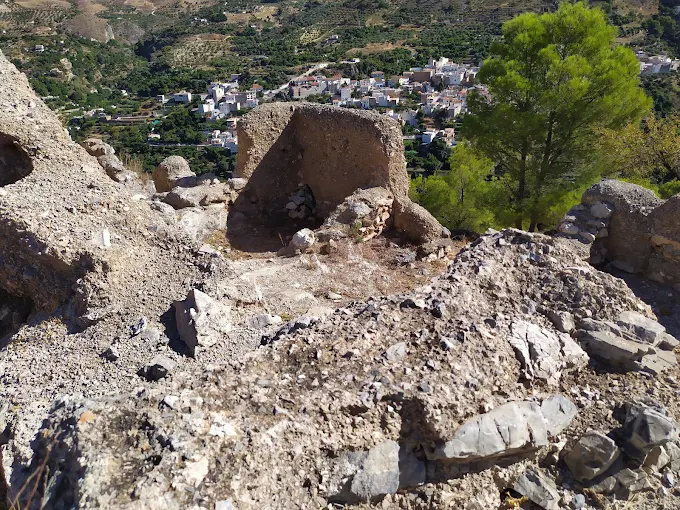
In addition to residential buildings, the settlement included structures essential for daily life. One of the most important was a cistern built against the defensive wall, used to store water.
Outside the enclosure, archaeologists have identified the remains of an irrigation channel and a reservoir, indicating that the inhabitants practised agriculture in the surrounding area.
Excavations have uncovered more than 400 ceramic objects, including cooking pots, pans, storage jars, pitchers and bowls used in everyday life. Researchers have also found moulds related to sugar production, possibly linked to sugar cane cultivation in the historic Guadalfeo River delta near the coast.
A key site for understanding rural life in al-Andalus
El Castillejo offers a valuable insight into how small fortified rural communities functioned in medieval al-Andalus. The preserved walls, domestic structures and archaeological finds help researchers reconstruct daily life in this type of settlement.
Beyond its historical importance, the site also offers spectacular views of the Toba Valley and the surrounding mountains of the Guájares, making it a rewarding destination for visitors interested in archaeology, history and hiking.