- Home
- Business Directory
- Get the App
- Things To See & Do
- News
- Properties
- Event Guide
 ES
ES
Los Guajáres
Los Guájares: Nature, History and Authenticity on the Costa Tropical of Granada
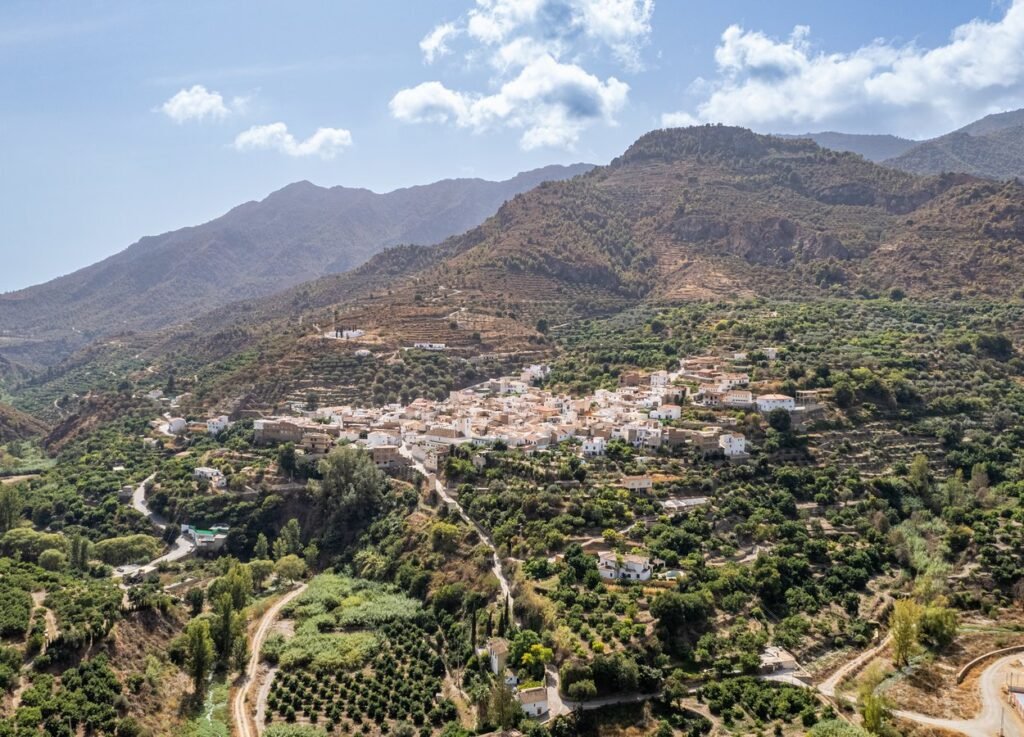
Located inland within the Costa Tropical of Granada, Los Guájares is a municipality distinguished by its dramatic landscape and remarkable natural richness.
The area is defined by hillsides covered in Mediterranean vegetation, agricultural terraces where subtropical crops such as avocados and mangoes thrive, and the deep valley carved by the Toba River, also known as the River of Blood. The proximity to the Mediterranean moderates temperatures throughout the year and supports both native Mediterranean flora and subtropical agriculture. The result is a landscape of striking contrasts—bright, peaceful and ideal for those seeking tranquillity and direct contact with nature.
Location and the Valley
Los Guájares lies in the southern part of the province of Granada, just a few kilometres from the Mediterranean coast and well connected to towns such as Motril and Salobreña.
The municipality stretches along the well-known Valley of Los Guájares, a natural corridor nestled between mountain ranges that has historically shaped agricultural life and human settlement. The valley acts as the backbone of the territory, concentrating both farmland and the main traditional communication routes.
The Villages
The municipality consists of three villages that remained independent until 1973: Guájar Faragüit, Guájar Fondón and Guájar Alto.
Guájar Faragüit is the main settlement and the location of the town hall. Most essential services and part of the commercial activity are concentrated here. Guájar Fondón preserves an urban layout of Andalusi origin, with narrow, steep streets, whitewashed houses and small corners that retain their traditional essence. Guájar Alto, smaller and situated at a higher elevation, offers open views over the valley and an especially peaceful atmosphere. Together, the three villages are home to just over one thousand residents and maintain a distinctly rural character.
History and Origins
The origins of Los Guájares date back to the Muslim period. Its name derives from Arabic and refers to the rugged nature of the terrain. During the Andalusi era, several farming hamlets were established here.
After the Christian conquest of the Kingdom of Granada in the 15th century, the area underwent redistribution and repopulation processes, particularly following the expulsion of the Moriscos in the 16th century.
Within the municipal boundaries, remains of ancient fortifications and settlements survive, such as El Castillejo, which highlight the strategic importance of the area. The present administrative configuration dates from the 20th century, when the three villages were unified.
Services and Local Life
Despite its small size, Los Guájares offers essential services including a medical clinic, a nursery and primary school, sports facilities and small shops, mainly located in Guájar Faragüit. The local economy is based on agriculture—particularly subtropical and traditional dryland crops—as well as a growing rural tourism sector.
The gastronomy preserves traditional recipes from La Alpujarra and the Costa Tropical, with dishes such as migas, garlic goat stew (choto al ajillo), and hearty stews prepared with locally grown produce.
What to See and Do
Los Guájares is particularly attractive for hiking and nature tourism. Several routes run through the valley and climb into the surrounding mountains, offering panoramic views of the coastline and the inland ranges. Ravines and riverbeds create areas of great natural beauty.
Visitors can stroll through the three villages to appreciate their traditional architecture, parish churches and small, intimate squares that preserve their Andalusi structure.
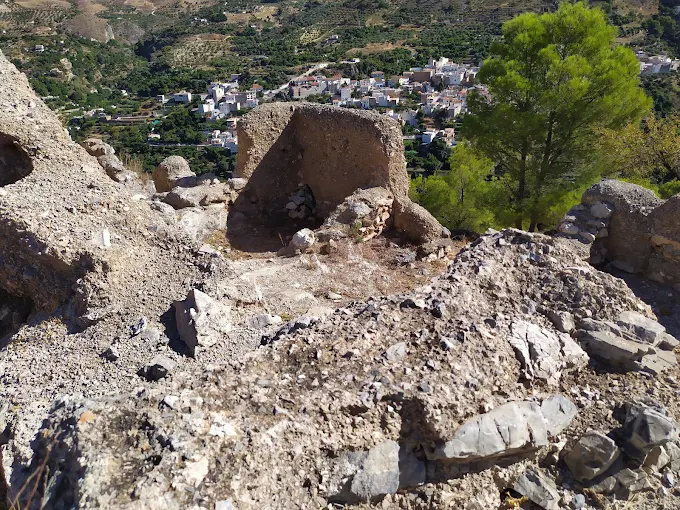
Among the historical landmarks, El Castillejo stands out as a former fortified settlement of medieval origin, linked to the Almohad period. Located in a strategic position overlooking the valley, the site preserves remains of walls and defensive structures that demonstrate its role in controlling the territory. From this elevated point, the surrounding landscape can be fully appreciated, helping visitors understand its historical significance as both a defensive and agricultural enclave. The walk to the site follows traditional paths that cross cultivated land and Mediterranean scrub, combining cultural interest with scenic value.
Finally, its proximity to the coast allows visitors to complement their stay with trips to beaches and other enclaves along the Costa Tropical, making Los Guájares an ideal destination for combining sea and mountains in a single journey.